Americans reported losing $1.14 billion to romance scams in 2023, the highest reported losses of any imposter scam the FTC tracks.
Federal Trade Commission, "Love Stinks" data spotlight, February 2024Dating
A scammer makes a new profile every day.The face behind it doesn't change.
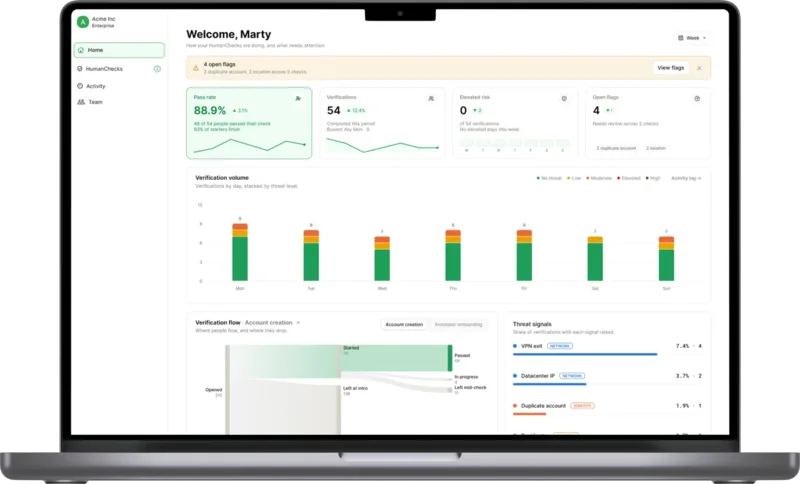
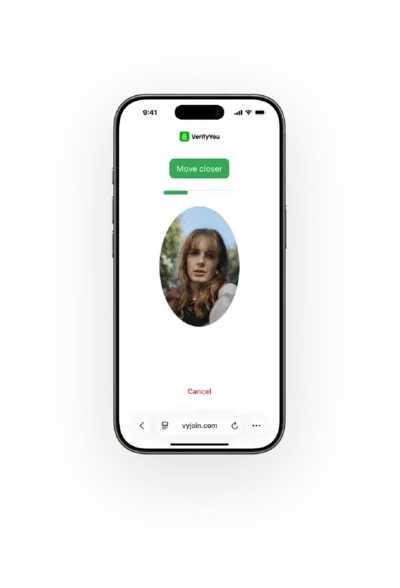
Passive signals check every visitor, and a 3 second selfie, when a profile looks risky, confirms a live, unique person is behind it, with no ID to upload.
The problem
How fake profiles work
- Profile photoUploaded onceLive selfieDifferent face
Catfishing
Someone builds a profile from another person's photos, and nothing at signup checks whether the face is theirs.
- Alex, 31alex•••@gmail.comRemoved Jun 2Sam, 30s•••@outlook.comNew, Oct 12Same face
Banned users return
A removed scammer signs up again with a new email and a new phone, and the profile looks brand new.
- 24 new profiles5 script-created
Bots and fake profiles
Scripts spin up dozens of profiles at once, faster than reports can get them removed.
How it works
A live person behind every profile.
01
Passive signals score every new profile
Network, device and behavior signals run in the background before a profile goes live, and build a history: past scores and how many profiles they've started today.
02
Risky profiles take a face check
When the signals flag risk, a 3 second selfie confirms a live, unique person is behind the profile, and that it isn't a face you've already banned. Good-faith daters never see it.
03
The profile goes live, on your app
A verified profile opens what you decide: a badge, messaging, or the whole app. With code, it's two API calls; without code, a hosted link does the same check.
New profile2 minutes oldElevated
The platform
Passive defenses first, proof of human when it counts.
Why now
Romance scams top the FTC's imposter losses
A free pilot on new profiles shows how many sign-ups bring a face already on another profile, and how many removed daters try to come back.



A solution for every scenario
Let's talk trust
Start with a free pilot: see what the check catches on your own users, with no dev work to begin.
With tools like VerifyYou, AI becomes a force for good. It helps prevent AI-driven fraud and can be done with much lower friction than what we built over the years.
Built by humans from
- Quora
- Square
- Gusto
- Cohere Health
- Accenture
Security
Privacy and security in every decision
We keep a face code, not the photo, and hold it under SOC 2 Type II and ISO 27001:2022 compliant controls.
No images stored. VerifyYou does not store images.
No ID or documents. HumanCheck anonymously confirms there is a real, live, unique person, with no name or ID.
A face code, not a photo. We treat it as sensitive biometric data.
 SOC 2 Type II
 ISO 27001:2022
 ISO/IEC 30107-3 PAD Level 1 & 2
 GDPR compliant
Common questions
Will daters drop off at a selfie?
You decide who sees the check and when: at signup, before messaging, or only for profiles your signals flag. The anonymous HumanCheck is designed to keep drop-off low. A free pilot lets you measure it on your own traffic.
Can a banned user come back on a new account?
Recognition is on the face, not the device or the email, so a new phone behind a new email still matches the face already on record. Separately, if a person has been flagged elsewhere in our network, you get an anonymous signal. We never say which platform.
Can you check that a profile's photos belong to the person?
The live check at signup confirms a live, unique person is behind the profile. Checking whether older uploaded photos match that same person is a separate capability: face similarity.
Can it catch bots signing up in bulk?
Passive signals flag the automated behavior behind a batch of new profiles and send those profiles to a face check. A script has no live face to show, so none of them pass.
Can it estimate a dater's age?
The same selfie can return an estimated age range, and you choose which signals to collect. It's an estimate, not legal proof of age, so pair it with your existing age checks where the law requires proof.
Can one person run several profiles at once?
Uniqueness is scoped to your platform, so a second profile from the same face matches the first. You decide whether to block the second one or allow and flag it for review.
What if someone has a friend or family member take the selfie for them?
One handoff can look legitimate on its own. At any real scale it falls apart: each profile needs a new device, a new phone number, and has to pass every other passive and device signal too, every time. Anyone willing to hand over a device for a face check would just as easily hand it over for an ID check, so the risk isn't unique to this.
How much work is it to add?
It's two API calls: one to start the check and one to read the result.
Do we have to replace our KYC or bot tools?
No. It sits on top of your stack, so you keep your KYC and bot tools.
What does it cost?
It's 50 to 100 times cheaper than KYC. You pay per check, and nobody uploads an ID document.
Resources
Keep learning
Blog
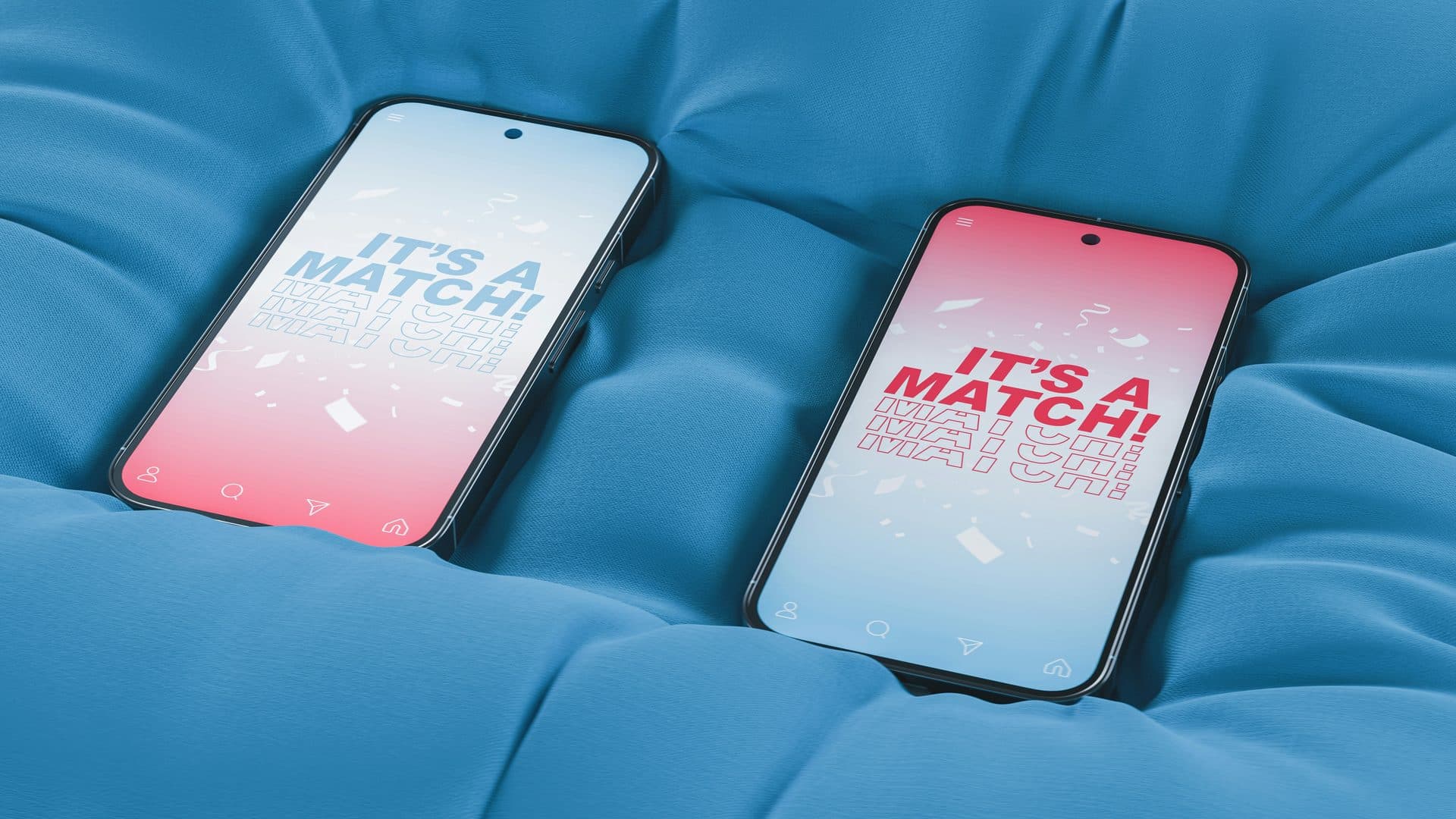
Why Dating Apps Can't Detect Their Way Out of the AI Scam Era
AI now runs the entire romance scam, and the old ways of spotting a fake have stopped working. For dating platforms, that turns a safety problem into a growth problem.
Read the post
Blog
The Best Human Verification Platforms in 2026
Human verification covers four different product categories that solve four different problems. This guide separates them, compares what each one confirms, and shows which published prices vendors actually disclose.
Read the post
Blog
Sybil Attacks in AI Data Labeling: How Platforms Prevent Them in 2026
How one person running many annotator accounts distorts training data, how the major labeling platforms defend against it today, and how the tools built to stop it compare.
Read the post
Ready to get started?
VerifyYou scales trust: passive signals on every session, a face check only when risk calls for it.