One account per person, whatever the email.
Ban check at sign-up
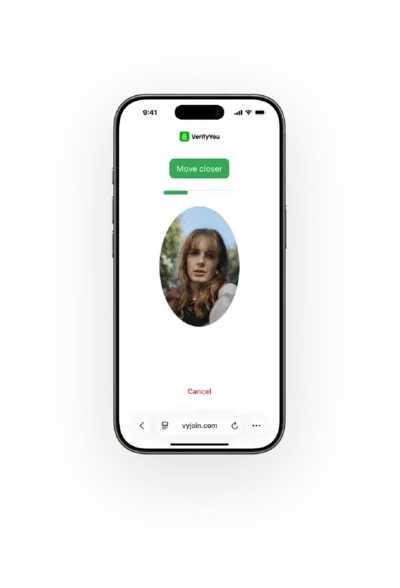
Every account gets scored in the background. The risky ones also get a 3 second, anonymous selfie, and a banned face gets matched the moment it tries again.
A banned member returns within the hour with a new email, phone and device, and the old check doesn't catch it.
Burner numbers and AI-generated documents pass a signup check that was never looking for a face.
A scammer removed from another platform signs up with you, and nothing on your side knows them.
01
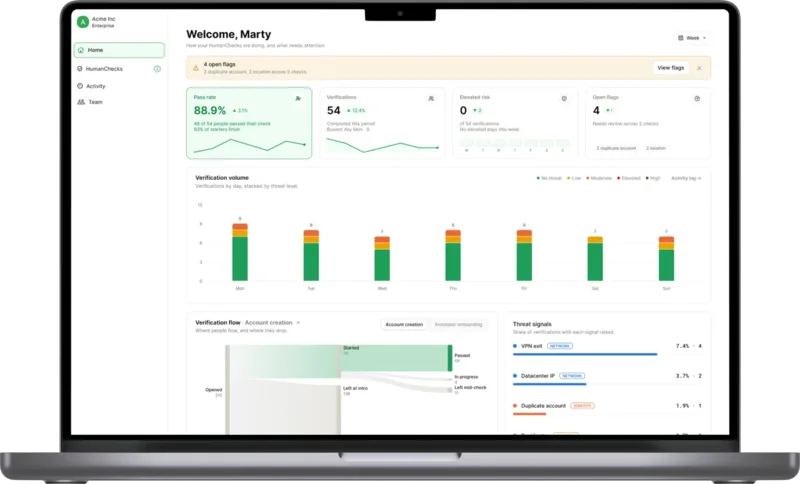
Network, device and behavior signals run in the background and build a history for each new account, so a farmed number or an emulator stands out before anyone looks.
02
An anonymous HumanCheck, a 3 second selfie, confirms a live, unique person is behind the new account. Good sign-ups never see it.
03
If the face matches one already on your ban list, the new account is blocked and the flag points straight at the old one, whatever email or device it arrived on.
Start with a free pilot: see what the check catches on your own users, with no dev work to begin.
With tools like VerifyYou, AI becomes a force for good. It helps prevent AI-driven fraud and can be done with much lower friction than what we built over the years.
Built by humans from
We keep a face code, not the photo, and hold it under SOC 2 Type II and ISO 27001:2022 compliant controls.
No images stored. VerifyYou does not store images.
No ID or documents. HumanCheck anonymously confirms there is a real, live, unique person, with no name or ID.
A face code, not a photo. We treat it as sensitive biometric data.
 SOC 2 Type II
 ISO 27001:2022
 ISO/IEC 30107-3 PAD Level 1 & 2
 GDPR compliant
Their face matches the record already on file, and the flag names the old account, even with a new email, phone or device.
It tells you a live, unique person wrote it and holds one account. Whether they bought the product, or meant what they wrote, is still for your own review rules.
Set the outcome to Allow and flag. The member gets in, the match is raised for your team, and the decision stays with a person.
If a person has been flagged elsewhere in our network, you get an anonymous signal. We never say which platform.
No. We keep a face code, not your users' images.
It's two API calls: one to start the check and one to read the result.
No. It sits on top of your stack, so you keep your KYC and bot tools.
It's 50 to 100 times cheaper than KYC. You pay per check, and nobody uploads an ID document.
Blog
The Treadmill Problem in Trust and Safety
Bot detection resets every quarter, but confirming a real person holds in perpetuity.
Read the post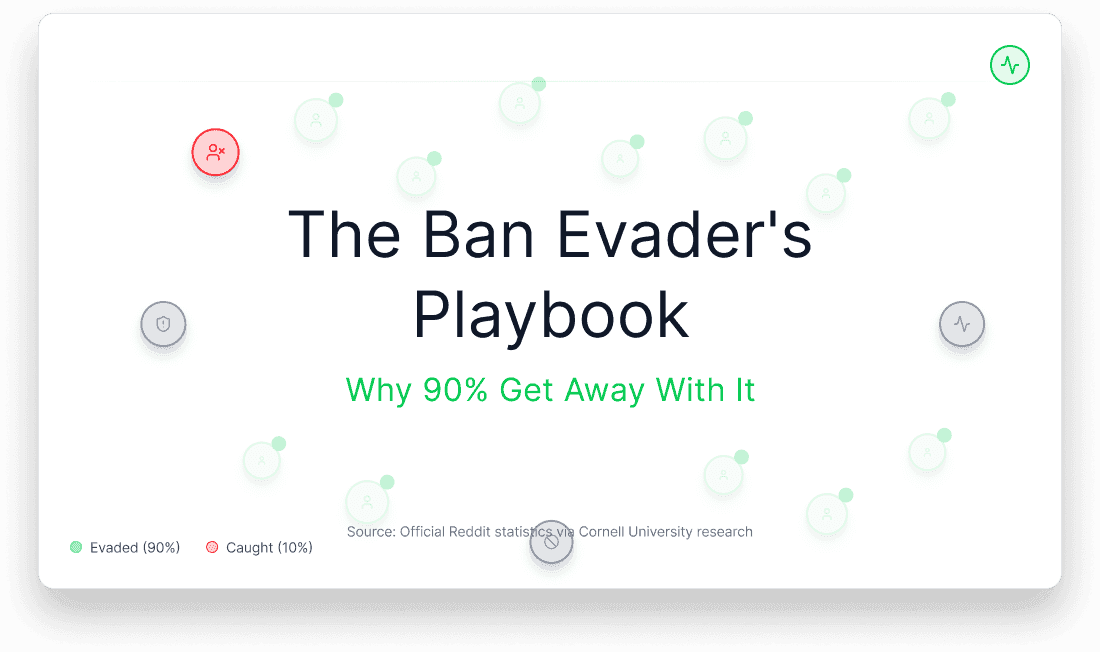
Blog
The Ban Evader's Playbook: Why 90% Get Away With It
Reddit's most sophisticated ban evasion tool misses 90% of them.
Read the post
Blog
The Best Human Verification Platforms in 2026
Human verification covers four different product categories that solve four different problems. This guide separates them, compares what each one confirms, and shows which published prices vendors actually disclose.
Read the postVerifyYou scales trust: passive signals on every session, a face check only when risk calls for it.
We use cookies. Privacy