Technology ·
How much of your traffic is human?
Search traffic is falling and bots keep multiplying. Publishers who can tell their readers from bots get to set the terms for both.
Ammar Khan

Publishers are making big calls right now about audience, advertising and AI licensing, and most of them are making those calls without knowing how many of their visitors are people. Search traffic is falling fast while automated traffic keeps climbing, so the guessing gets more expensive every month.
The numbers are moving quickly. Google Search traffic to publishers fell 40.2% in the year to July 2026, according to Chartbeat. AI assistants have picked up only a sliver of that, since chatbots still send less than 1% of publisher pageviews. Bots now make up more than half of all web traffic, and on publisher sites, AI bot visits went from about one for every 200 human visits at the start of 2025 to one for every 31 by the end of the year.
The rules only work when bots tell the truth
Robots.txt and the new bot-labelling laws all rest on the idea that bots will say who they are, and plenty of them lie. In the US, more than 300 news executives went to Congress on September 29 to push the Stealth Bot Prohibition Act, which would make AI crawlers declare themselves. In the UK, the notes to the Automated Online Software (Access and Transparency) Bill point out that a bot can borrow the name of another bot or of a common web browser, and that the law today lets it visit while keeping quiet about who it is and why it came. That bill is due back in front of lawmakers on November 27.
Regulation is on its way, and until it lands, publishers need their own way to know which visits come from real people.
Marty Weiner, our co-founder and CTO, was Pinterest's founding engineer and Reddit's first CTO, and he spent years fighting bots, spam and fraud at scale. The open web ran on a simple deal: let people in, and readers come back. Bots break that deal quietly, one scrape at a time. The lesson from all those years is that you can only manage what you can count, and once you know which visitors are human, every decision after that gets easier, from audience numbers to licensing terms.
One quick check, one real person
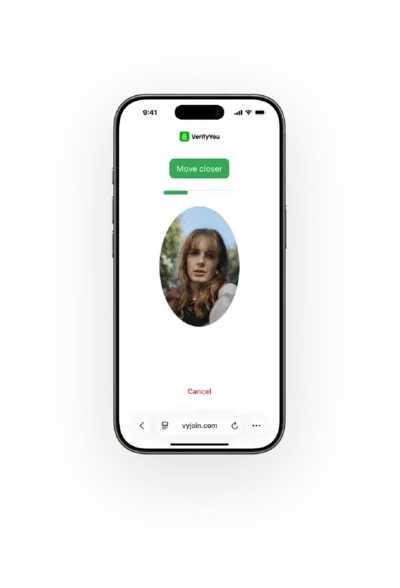
HumanCheck confirms a real, unique person in seconds on mobile web. The publisher gets an anonymous confirmation along with an audit trail, and each person gets one account.
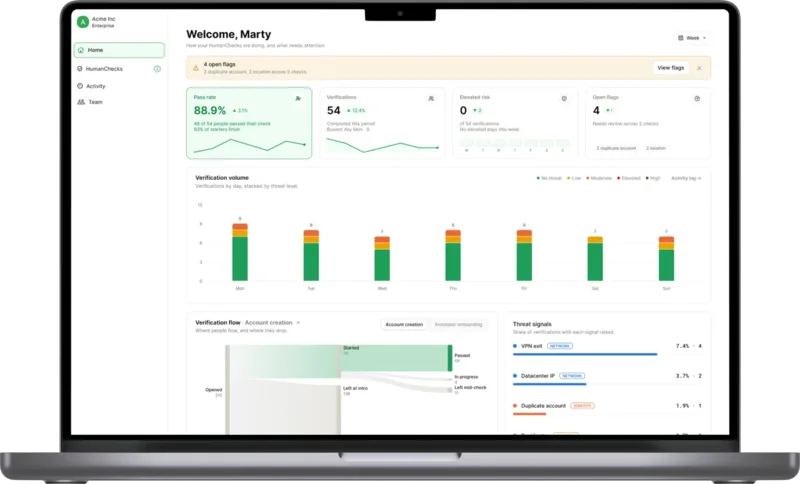
Passive Signals runs alongside it and reads signals like IP clustering, proxy use and device history, so click farms, bots and account abusers show up clearly. Returning readers pass in the background. Publishers choose where a check appears, like at sign-up or before a comment, and match the results against the user records they already have. Setup takes two API calls, and teams that want to start faster can use a shareable no-code link.
Bad actors move from company to company, so VerifyYou runs opt-in, anonymized fraud intelligence across its network. Someone flagged on another site arrives already known, and partners only learn that a flag exists.
What publishers can do now
- Count people on their own. Measure your human audience apart from bots and AI referrals, starting with the logs and analytics you already have.
- Set a crawler policy. Sort search crawlers from training and agent bots, and look at the policy again every quarter, since some networks now block mixed-use crawlers by default.
- Verify the people who matter. Put human verification behind the accounts, comments, newsletter sign-ups and survey responses that carry your audience numbers and your commercial case. We run a free A/B pilot for publishers, and it takes about a day to set up.
Publishers still hold what AI systems want most, which is original reporting people trust and readers who come back. The window to protect that on your own terms is getting smaller, so now is the time to put people back at the center of your audience. If you want to see your own split first, Passive Signals is free to start, and you can sign up here.
Keep the internet human.